
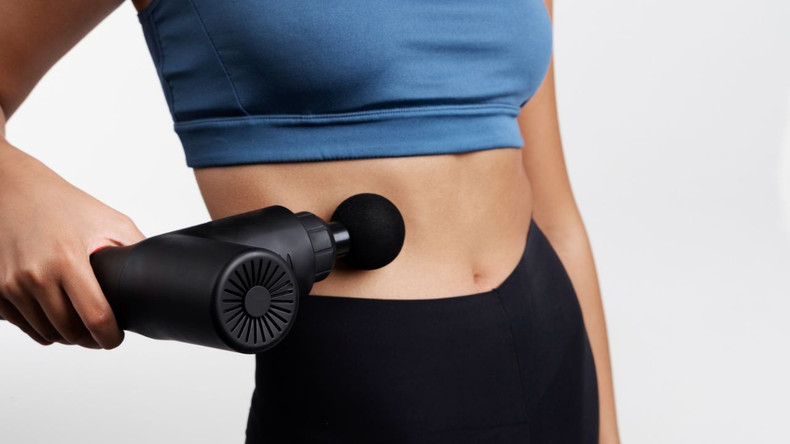
You know that feeling when your quads are absolutely screaming after leg day? Or when your back feels like someone's tied knots in it that just won't budge, no matter what you do?
The thing is, most people grab their massage gun and just use whatever attachment came on it. At most, they may switch it up once or twice. But here's what nobody tells you: the attachment makes a massive difference, especially when you're dealing with big, dense muscle groups like your quads and back.
These aren't delicate little muscles. They're thick, powerful, and they need specific tools to actually get relief. Using the wrong attachment on your quads? You'll spend 20 minutes and feel like you barely made a dent.
So let's talk about what actually works.
The Large Ball Attachment (Your Best Friend)
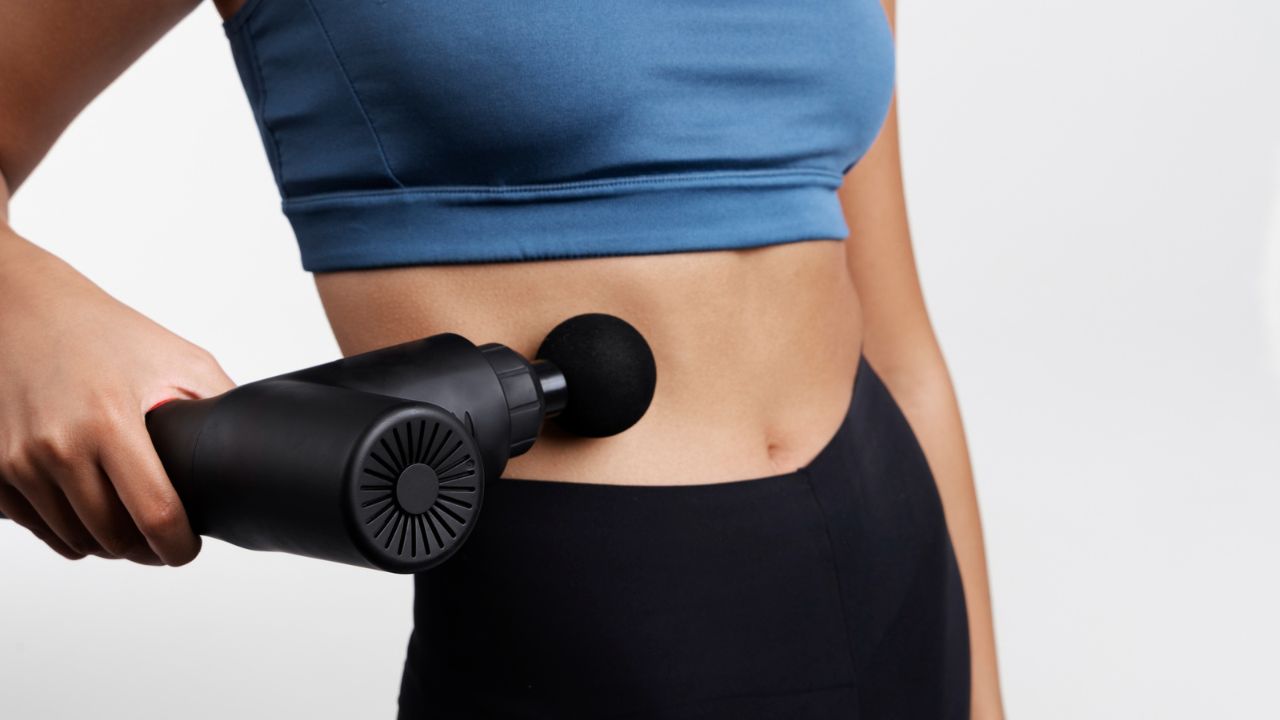
This attachment should probably live on your massage gun permanently if you're focused on quads and back work.
The large ball has a rounded surface that spreads pressure across a wider area. That's exactly what you want for big muscles. When you're working on your quads, you're not trying to pinpoint one tiny spot... you're addressing this massive group of four muscles working together.
Why it works so well:
- Covers more surface area with each pass
- Distributes force evenly so nothing feels too sharp
- Glides smoothly along the muscle length without catching
- Perfect for post-workout recovery when muscles are fatigued
For your back, especially those erector spinae muscles running along your spine, the large ball just glides. You can work from lower back up toward the shoulders, and it feels like you're actually reaching the tissue.
After heavy deadlifts or a long day hunched over a desk, running the large ball along your back for a few minutes brings fresh blood flow to the area. Not just surface level either... You can actually feel it penetrating deeper layers where tension has built up.
Check out our premium large ball attachment designed for big muscle groups.
The Flat Head (When Things Get Serious)
Okay, so the large ball is great for general work. But what about those stubborn spots that won't quit?
That's where the flat head comes in.
It looks simple. Just a flat, circular pad. But that firmness is exactly why it works for dense muscle tissue. The flat surface creates this even, penetrating pressure that sinks deep into the muscle belly.
Your quads can handle a lot, right? They're workhorses. Sometimes they need more than gentle treatment. The flat head delivers firm, sustained pressure that actually encourages those tight muscle fibers to release.
Best uses for the flat head:
- Stubborn knots in the quad muscles that won't respond to other treatments
- Deep tissue work on thick lat muscles
- Areas around the shoulder blades where tension concentrates
- When you need serious penetration without feeling too aggressive
Here's the key, though... move slowly. Don't just blast away at full speed. Let the attachment sink in, give those muscle layers time to respond. Your quads have layers upon layers of tissue, and rushing doesn't let the deeper stuff benefit.
Explore our range of attachments for serious deep tissue work.
The Fork Attachment (Game-Changer for Your Back)
This one changed everything for back work.
The fork (sometimes called U-shape) has two prongs with a gap between them. That gap is designed to straddle your spine while the prongs work both sides simultaneously.
Think about it. When you try to massage near your spine with other attachments, it either feels awkward or you're putting pressure directly on the vertebrae. Neither feels good. The fork solves this completely.
You position it so your spine sits in that gap, and both sides of your back get treated at once. Symmetrical treatment means you're not creating muscle imbalances or favoring one side over the other.
For quads, the fork works well along the outer edges, particularly where the vastus lateralis muscle meets the IT band. The U-shape lets you bracket the area without putting direct pressure on the IT band itself.
Understanding Firmness (This Matters More Than You Think)
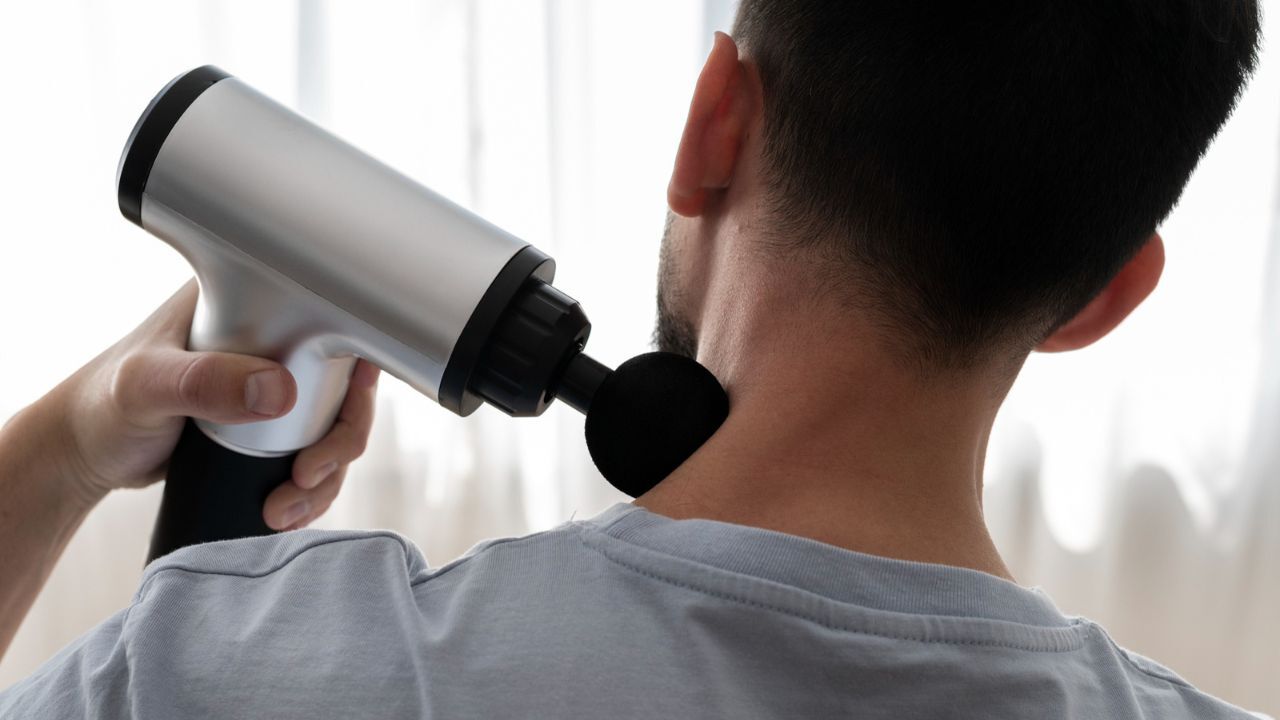
Not all massage gun attachments are created equal when it comes to material.
Some are hard plastic. Others are softer foam. For large muscle groups, firmness matters.
Soft foam attachments feel nice initially, but here's the problem... they absorb too much force. When you're trying to work deep into your quads or back, that cushioning means the percussion doesn't reach where you actually need it. You end up pressing harder, working longer, getting fewer results.
Firmer attachments transfer force efficiently. The percussion actually reaches those deeper muscle layers where chronic tightness lives. Especially important when dealing with post-workout soreness that's settled in deep.
How to Actually Use These Properly
Having the right tools means nothing if you're using them wrong.
Start low, go slow:
Speed and intensity should begin lower than you think. Even though large muscles can handle pressure, they need time to warm up and respond. Blasting at full intensity immediately is like stretching cold muscles.
Move the attachment in slow, deliberate patterns. For quads, work from the hip toward the knee, following the natural muscle fiber direction. For the back, vertical movements along the spine and horizontal movements across lats work best.
Spend at least 60-90 seconds per large muscle group. These aren't small areas. They need time under treatment to actually benefit. Quick passes don't cut it.
Listen to your body:
You should feel a "good hurt," not sharp pain. If you're tensing up or holding your breath, you're pushing too hard. The goal is muscle relaxation, and you can't relax tissue you're aggravating.
Post-Workout vs. Recovery Days
The way you approach these attachments should shift based on timing.
Right after a workout, when your quads are pumped full of blood, and your back is fatigued from heavy lifting, go gentler. Use the large ball at moderate intensity for shorter durations. This promotes blood flow and starts recovery without overwhelming already-taxed muscles.
On recovery days, when you're dealing with residual soreness or stiffness, you can be more aggressive. That's when the flat head shines. Spend more time working through specific tight areas, and use higher intensity if your body tolerates it well.
This is maintenance work. Preventing small issues from becoming chronic problems.
Common Mistakes to Avoid
Let's talk about what not to do.
- Stop rushing. Large muscles need time under the attachment. Running the gun over your quads for 30 seconds accomplishes basically nothing except making noise.
- Don't ignore pain signals. They're working through tight tissue, and then there's causing damage. If something feels sharp or shooting rather than deep pressure-based discomfort, adjust or skip that area.
- Avoid joints and bones directly. Work the muscle belly of your quads, not the kneecap. Treat the thick muscles around your spine, not the vertebrae themselves.
Building Your Essential Setup
You don't need 15 different massage gun attachments. You need the right three or four.
For quads and back work specifically:
- Large ball - Your everyday workhorse for general treatment
- Flat head - For deeper penetration when things get stubborn
- Fork attachment - Essential for back work along the spine
- Optional wedge - For targeted spots within larger muscle groups
These four cover virtually everything you'll encounter with large muscle work.
What Actually Matters Most
Here's the truth that nobody wants to hear but everyone needs to understand.
The absolute best attachment is the one you'll use consistently.
If the large ball feels most comfortable, and that means you'll use it every single day, that's infinitely more valuable than having the "perfect" attachment sitting in a drawer because it feels too aggressive.
Muscle recovery isn't about finding some magic solution. It's about showing up regularly, addressing tension before it becomes chronic pain, and maintaining those large muscle groups that carry you through workouts and daily life.
Your quads power every step, squat, and lunge. Your back supports virtually every movement you make. They deserve consistent care, and understanding which tools work best is how you provide it.
The right massage gun attachments for large muscles aren't complicated. Large ball for general work, flat head for stubborn spots, and fork for back-specific treatment. Use them consistently, move slowly, listen to your body.
FAQs
Which massage gun attachment should be avoided on large muscles like the back?
Attachments that focus pressure into a very small area can feel too sharp on large muscles and may cause discomfort instead of relief. Broader attachments that spread pressure evenly are generally more comfortable and effective for the back.
How long should a massage gun be used on quads or back muscles?
Most large muscle groups respond well to short, steady sessions rather than long, aggressive ones. A few minutes per area is usually enough to promote relaxation and circulation without overstimulating the muscle.
Can using the wrong massage gun attachment make muscle tightness worse
Yes, using an attachment that is too narrow or intense can cause muscles to tense up as a protective response. Choosing the right attachment helps muscles relax and improves the overall recovery experience.
Find the Right Attachment and Feel the Difference
Supporting large muscle groups can be achieved through proper maintenance, rather than trial and error. By utilizing a massage gun with specialized attachments for the quadriceps and back, your muscle recovery becomes easier, more comfortable, and quicker than ever before! Top Massage Guns offers high torque motors with attachments that are well thought out and easy to operate, allowing for easy in-home recovery. Finding the right attachment in a trusted brand collection will help speed up recovery time for tight or sore quadriceps and stiff backs, and