
Ever lie on the couch after a long week and think, “If someone could just press that knot in my shoulder for five minutes, I’d feel so much better?”
Most people know that feeling of having tight shoulders, stiff hips, sore calves, and muscles that refuse to relax. A professional massage can help, but appointments take time and can be expensive. That’s why many people now use a massage gun for quick relief at home.
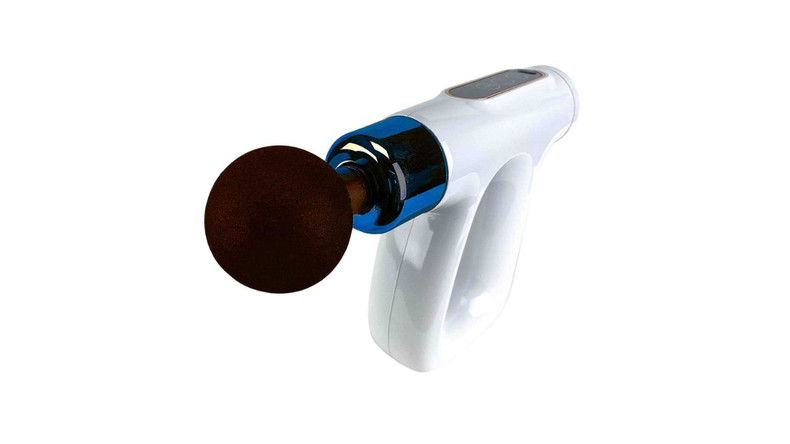
Massage gun techniques are simple ways to use a massage gun to relax tight muscles and improve muscle recovery. These techniques use percussion therapy, where fast pulses reach deep muscle tissue to reduce soreness and tension. When used correctly, a massage gun can recreate several professional massage therapy techniques, such as:
- Deep tissue release for stubborn muscle tension
- Trigger point therapy to target painful knots
- Myofascial release to improve muscle mobility
A massage gun cannot replace a trained therapist. But it can help with everyday muscle tightness, including:
- sore legs after workouts
- tight hips from sitting too long
- stiff shoulders from desk work
The key is learning how to use massage gun techniques safely. Once you understand the basics, your massage gun becomes a powerful recovery tool you can use anytime.
In this guide, you will learn seven massage gun techniques you can safely recreate at home, including:
- Best attachments to use
- Right speed settings
- Correct movement patterns to avoid injury
By the end, you’ll know exactly how to use your massage gun to relax tight muscles and recover faster.
1. Deep Tissue Massage Techniques
This is the technique everyone secretly craves. Slow, sustained pressure that sinks past the surface junk and forces stubborn muscle fibers to let go.
How to recreate it safely:
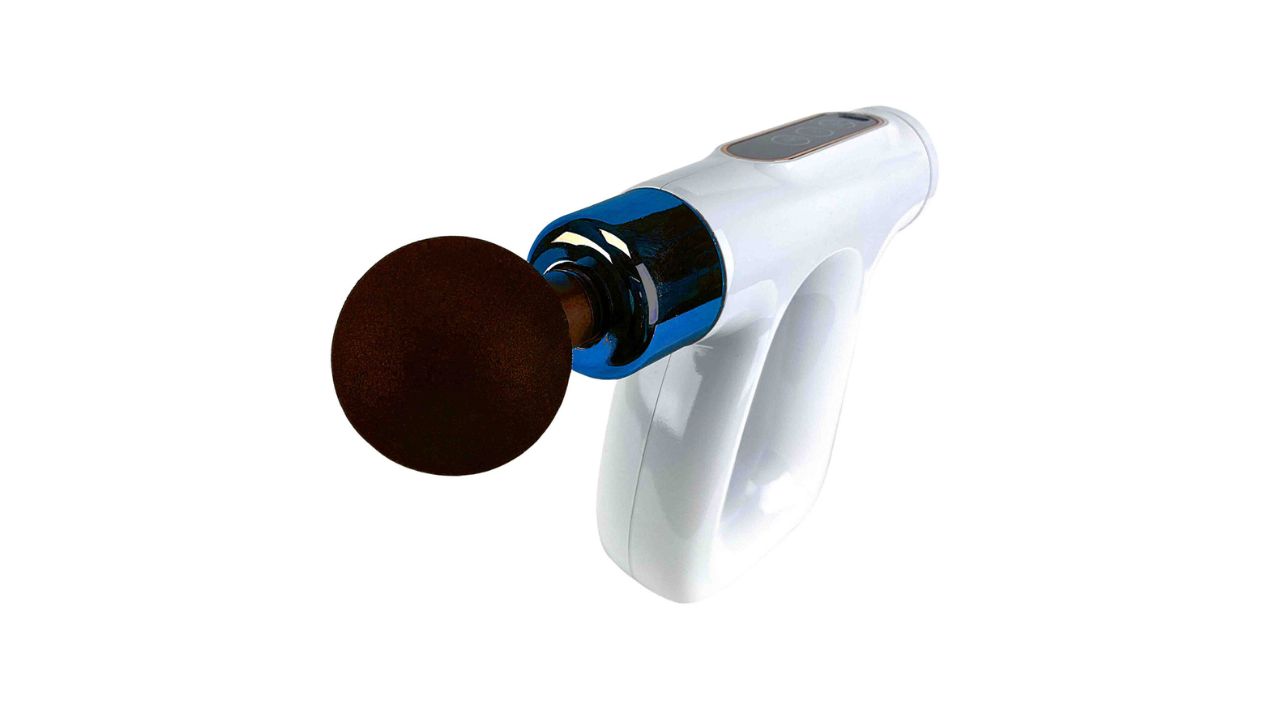
- Use the standard ball attachment (the soft or medium-firm one) from our massage gun attachments selection.
- Set the amplitude to 14–16 mm if the massage gun allows, speed around 2200–2600 RPM.
- Move painfully slowly, think one inch every three to four seconds.
- Pause on trigger points for 20–45 seconds while maintaining steady pressure.
The percussion does what an elbow does, except it delivers 35–40 tiny “digs” per second, fatiguing the muscle spindle faster and allowing deeper release without bruising, like with our high torque massage gun.
Key safety rule: never leave the massage gun directly on the bone or spine. Stay on meaty muscle bellies. If the area is acutely inflamed (hot, swollen, sharp pain), skip percussion and use ice instead.
2. Myofascial Release Massage Gun Techniques
Fascia is that cling-film-like tissue that gets sticky and restricted after long hours of sitting or heavy training. Therapists use long, gliding strokes to stretch and hydrate it.
With a massage gun, this becomes “strip technique.”
- Switch to a flat or bullet head for tighter areas.
- Drop speed to 1600–2000 RPM and use almost no pressure; let the weight of the gun do 90 % of the work.
- Start at the origin of the muscle and glide all the way to the insertion in one smooth, six-to-ten-second pass.
- Repeat five to eight times per line.
Think of ironing a wrinkled shirt: slow, overlapping strokes that smooth everything out.
3. Trigger Point Therapy
Trigger points are those evil peas under the mattress that refer to pain everywhere else. Classic approach: sustained pressure until the referral fades.
The gun version:
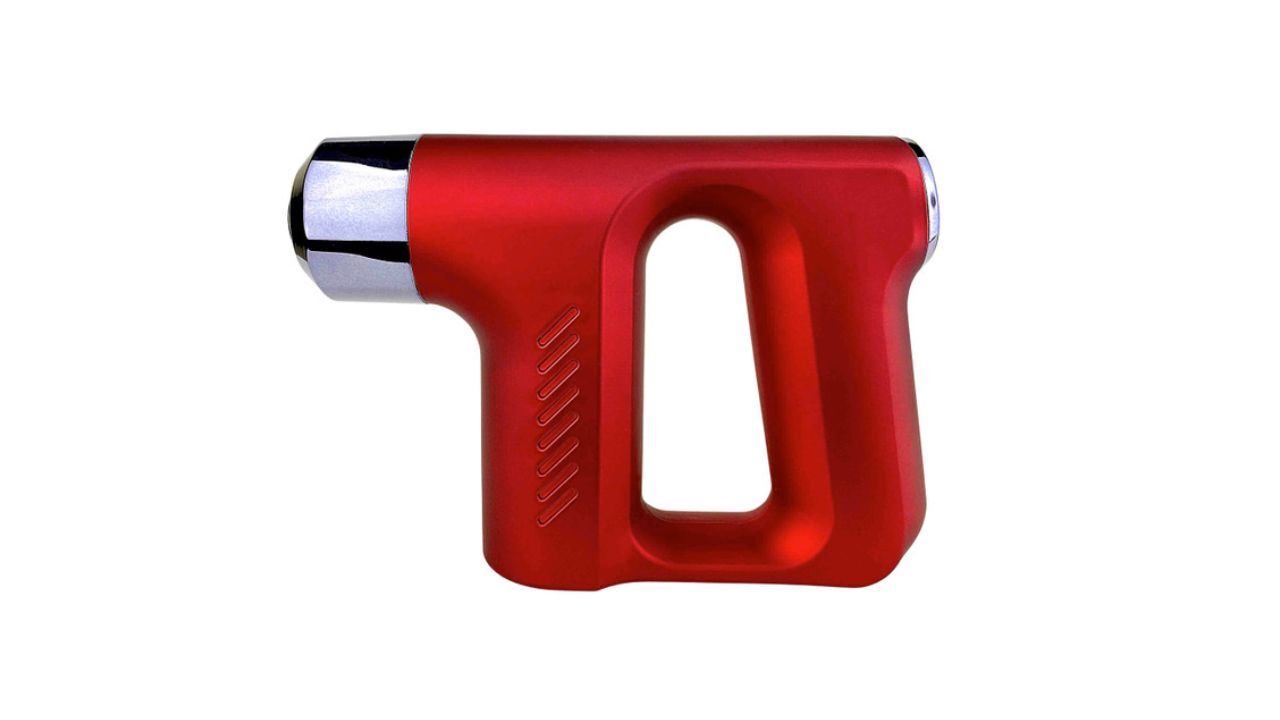
Bullet or cone attachment. Medium speed (2400–2800 RPM) on a compact massage gun for pinpoint accuracy. Find the spot that makes the eyes water, then hover right on it with moderate pressure for 30–90 seconds or until feeling that sweet “melt” sensation. The rapid pulses interrupt the neurological loop that keeps the knot firing.
Pro move: after the spot softens, immediately follow with a slow strip technique in the same direction as muscle fibers run. Locks in the release.
4. Cross-Friction Massage Techniques
Old-school therapists use their thumbs to rub across tendon fibers to break adhesions and stimulate blood flow. Brutal to receive, amazing when it works.
Safe percussion version:
Small bullet head, low-to-medium amplitude, very low speed (1300–1800 RPM). Light pressure only the head should barely dimple the skin. Move perpendicular to tendon direction for 2–3 minutes per spot.
Common targets: Achilles, patellar tendon, lateral elbow. The micro-trauma from gentle cross-pattern vibration stimulates collagen repair without the aggressive thumb pain.
Warning: only on chronic, grumpy tendons; never on acute tears or hot inflammation.
5. Lymphatic Drainage Massage Techniques
Post-workout legs feel like water balloons? That’s trapped fluid and metabolic waste.
Manual lymphatic work uses feather-light, rhythmic pumping strokes toward the heart.
With a massage gun: large, soft ball attachment, lowest speed (1200–1500 RPM), zero pressure. Long, rhythmic strokes are always directed toward the groin or armpit. A massage gun delivers you gentle nudges that encourage flow instead of force. Five to eight minutes per limb drops visible swelling and that heavy, toxic feeling faster than elevation alone.
6. Neuromuscular Re-Education Techniques
Sometimes muscles “forget” how to fire properly (glutes after years of sitting, VMO after knee surgery). Therapists tap or vibrate to wake them up.
Percussion does this on steroids.
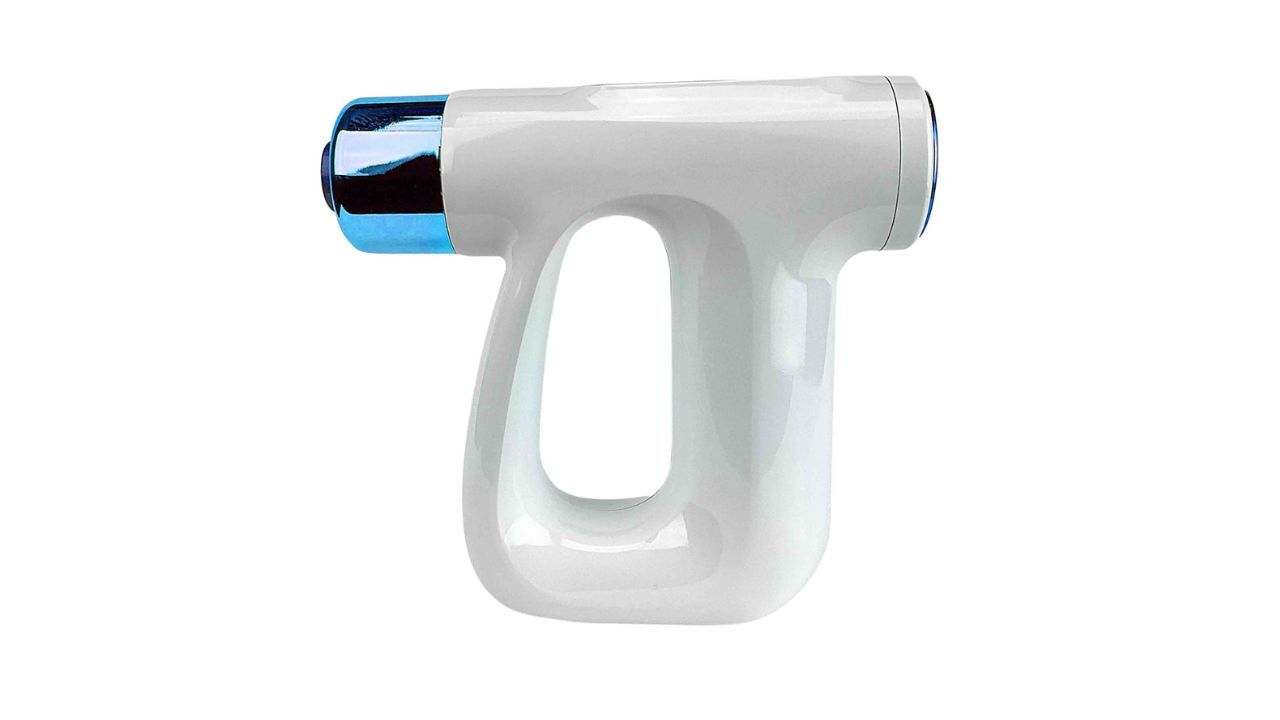
Medium ball, moderate speed (2000–2400 RPM), light-to-medium pressure. Rapid ten-to-fifteen-second bursts while actively contracting the target muscle. The vibration combined with voluntary contraction enhances neuromuscular activation, strengthening the mind-muscle connection almost instantly. Huge for glute activation before squats or scapular retractors before pulling days.
7. Pre-Workout Warm-Up Massage Techniques
Static stretching of cold muscles is out. Dynamic blood flow is in.
Two-minute protocol:
Large ball, 1800–2200 RPM, light sweeping strokes over major muscle groups. Focus on increasing local temperature and tissue elasticity. Follow with bodyweight movement. Tissue temperature rises 1–2 °C in under two minutes, reducing injury risk and making heavy loads feel lighter.
Putting It All Together – Sample Full-Body Sequence
Lower body day tomorrow? Try this ten-minute pre-bed routine:
- Two minutes lymphatic flushing calves → groin
- Three minutes of myofascial stripping quads and IT bands
- Ninety seconds trigger-point hunting in the glutes with a bullet.
- Two minutes deep-tissue release on hamstrings
- One minute of neuromuscular taps on the gluteus medius
Wake up, actually recovered instead of stiff.
Benefits of Using a Massage Gun
Massage guns are not just for exercise. They help your muscles feel better. They reduce soreness. They loosen tight spots. They help you move more easily.
Here’s what a massage gun does:
- Loosens Muscles: Deep tissue massage techniques and percussion therapy help knots go away.
- Improves Blood Flow: Pulses get blood moving. Muscles get oxygen and nutrients faster.
- Helps Lymph and Nerves: Gentle pressure moves fluids and keeps nerves working well.
- Speeds Muscle Recovery: Trigger point therapy and myofascial release reduce soreness and flush out lactic acid.
- Increases Flexibility: Muscles and joints move more easily.
- Supports Injury Healing: Can help break up scar tissue and reduce pain safely.
Tip: Use before workouts to warm up. Use after workouts to recover faster. Works for both pre-workout warm-up and post-workout recovery.
Are Massage Guns Safe to Use?
Yes, massage guns are safe if you use them right. They support muscle recovery and reduce soreness, and they use deep-tissue massage techniques. But using them incorrectly can cause pain or injury. Therefore, you must know where not to use a massage gun.
Here are some safety tips:
- Don’t Press Hard: Let the gun do the work.
- Limit Time: Spend 2–3 minutes on one muscle group.
- Start Slow: Use low speed and light pressure first. Increase gradually.
- Hold Straight: Keep the gun perpendicular to the muscle.
- Get Help for Hard Spots: Ask someone to help with areas like your back.
Follow these tips for safe use of massage guns and better results.
Some classic massage techniques should never be attempted with percussion:
- Direct work on the cervical spine or the carotid artery
- Abdomen or any organ areas
- Varicose veins
- Recent fractures or tears
- Over tumors, infections, or blood clots
When in doubt, stay on thick muscle and keep moving.
Ready to Find Your Perfect Massage Gun?
Now that you know which techniques work best at home, the next step is choosing the right massage gun to make it all happen. At Top Massage Guns, we've tested dozens of devices so you don't have to. We break down everything in simple terms. which attachments actually matter, what speed settings you really need, and which models give you the best bang for your buck.
Whether you're working with a tight budget or ready to invest in premium recovery, our detailed reviews and comparison guides help you find exactly what fits your needs. Check out our top picks and see which massage gun can transform your at-home recovery routine. Your muscles will thank you.
FAQs
What are the benefits of using a massage gun?
Massage guns help your muscles feel better. They reduce soreness. They loosen tight spots. They improve blood flow. They make muscles more flexible. They can help minor injuries too.
How do I use a massage gun safely at home?
Start slow. Use low speed and light pressure. Spend 2–3 minutes on each muscle. Keep the gun straight on the muscle. Let it do the work. Avoid bones, joints, and sore areas. Ask for help on hard-to-reach spots like your back.
Which massage gun techniques help with sore muscles?
Deep tissue release works well. Trigger point therapy eases tight knots. Myofascial release helps muscles move better. Lymphatic drainage and neuromuscular activation speed recovery.
Can I use a massage gun before workouts?
Yes, it warms up muscles. It increases blood flow. Muscles and joints move more easily. It can prevent injuries. After workouts, it helps muscles recover faster and feel less stiff.
Are massage guns safe for everyone?
Most people can use them safely. Avoid the neck, abdomen, organs, varicose veins, recent injuries, or tumors. If you have health issues, check with a doctor first.